
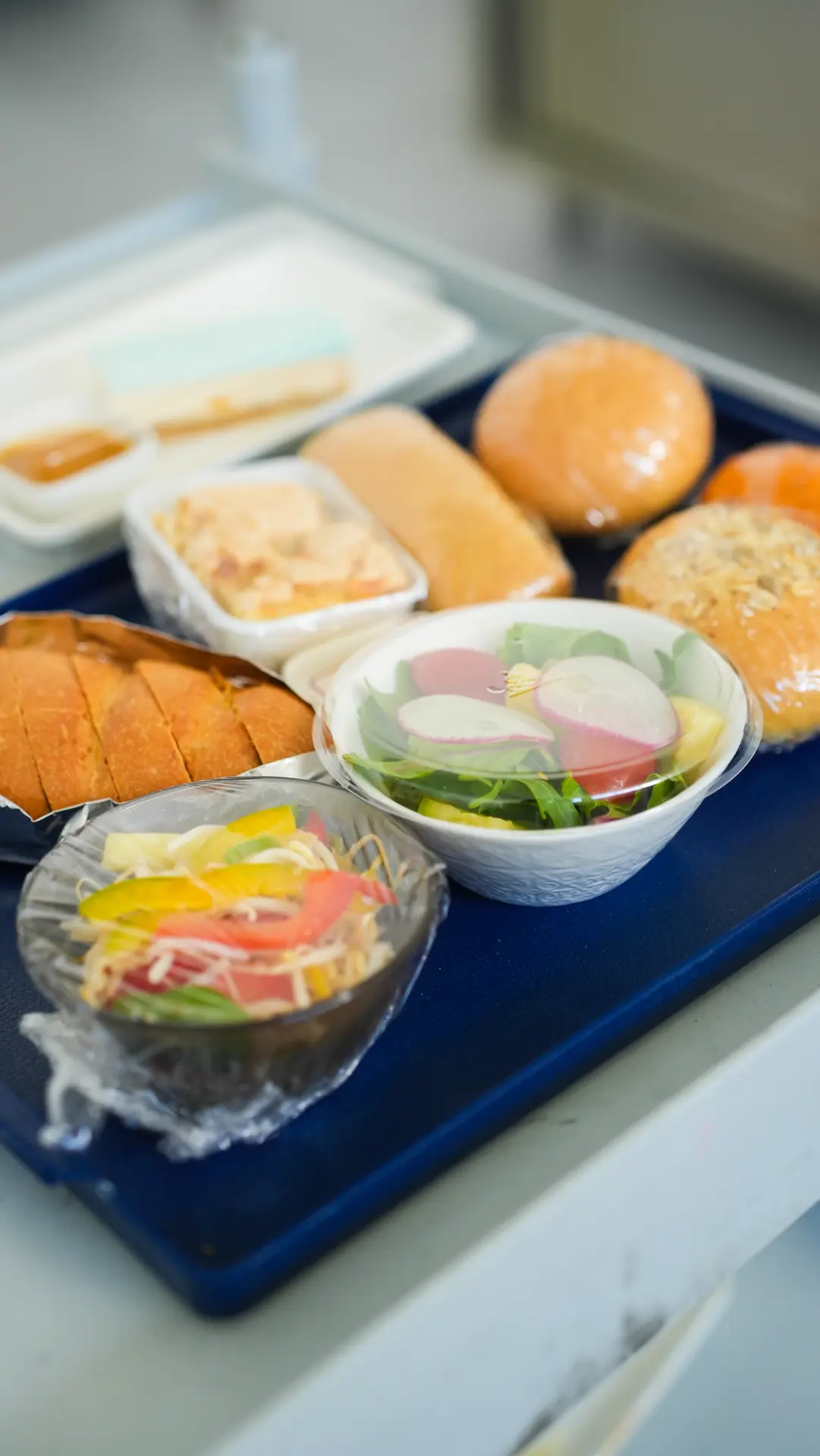
Behind every standard meal tray served on board is a precise engineering calculation. In aviation, every millimeter of space and every gram of weight directly impacts airline operating costs, meaning inflight catering must follow very specific guidelines.
1. Square Shapes Maximize Space Efficiency
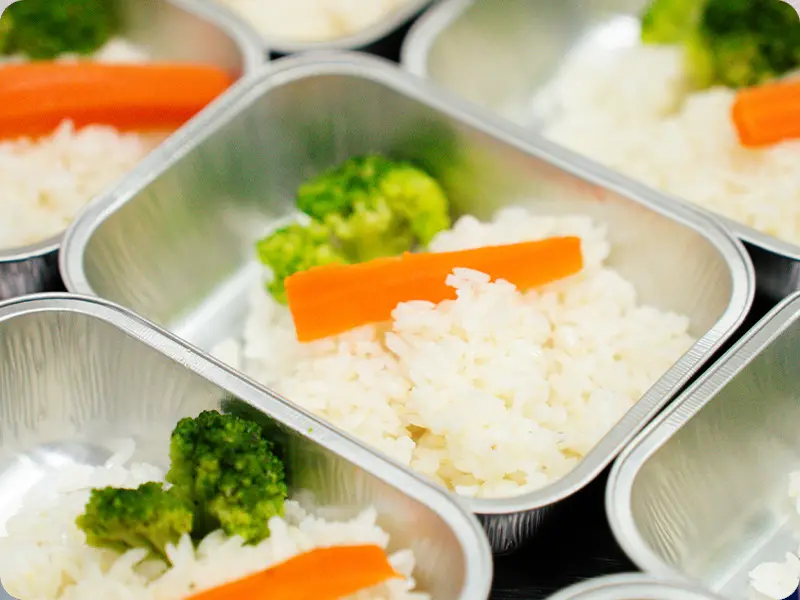
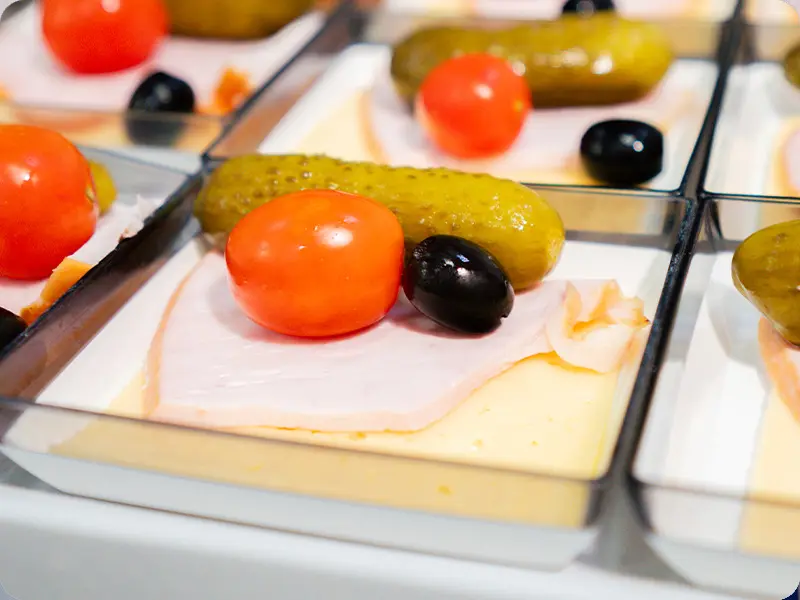
Round dishes leave too much wasted space. To prevent this, hot meal containers, salad bowls, and dessert dishes are made rectangular or square with rounded edges. They fit tightly against each other, allowing cabin crew to maximize cart capacity and efficiently serve the entire cabin.
2. Turbulence Protection
Cups and bowls fit very snugly on the tray, which features raised edges, recesses, or a non-slip surface. This design ensures that during turbulence or changes in the aircraft's pitch, hot coffee or sauces will not slide off onto the passenger.
3. Tableware Weight and Fuel Consumption
A heavier aircraft consumes more fuel. An extra 50 grams on each tray translates into millions in losses across hundreds of flights. This is why economy class utilizes ultra-lightweight, heat-resistant plastic instead of porcelain or glass. For the same reason, the thickness of the foil covering the casseroles is calculated down to the micron: it must retain heat while keeping weight to an absolute minimum.
Inflight catering is a highly optimized, modular system. Tableware must be light, durable, and compact. Only then can a flight be comfortable for passengers and cost-effective for the airline.